
- Amps
- Instruments
- Pro Audio
- Accessories
- Support
- About
Live sound production is an environment of high stakes and zero room for error. Whether it is a sold-out concert, a Sunday morning church service, or a high-profile corporate keynote, the demands on a sound engineer are immense. They must manage dozens of audio sources, monitor feeds, complex effects processing, and recording outputs simultaneously, often with very little setup time.
The shift to digital mixing consoles has not just changed the technology; it has fundamentally transformed the workflow. A modern digital mixer simplifies the entire ecosystem by consolidating signal processing, routing, effects, and scene management into a single, unified interface. This evolution allows engineers to achieve faster setups, cleaner signal paths, and unprecedented flexibility. These systems are the heartbeat of venues ranging from local theaters to global touring productions.
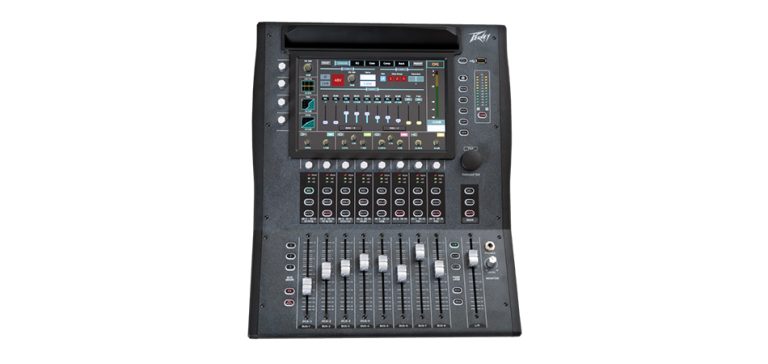
Professional audio manufacturers like Peavey have recognized that the greatest barrier to digital adoption is often complexity. While some consoles require weeks of training, the modern focus is on workflow-first design. Peavey digital mixers, such as the Aureus™ series, are engineered to support reliable, intuitive workflows that allow production teams to focus on the performance rather than the equipment. By prioritizing performance stability and sound clarity, these platforms ensure that even in demanding live environments, the engineer remains in total control.
In the world of live events, time is the most precious commodity. Soundcheck windows are often measured in minutes, and stage crews must be able to deploy systems rapidly. Digital workflows streamline this process significantly. Because the digital console houses the Digital Signal Processing (DSP) internally, the need for external hardware racks is virtually eliminated. This means fewer cases to move, fewer cables to plug in, and fewer points of failure.
Key workflow advantages that contribute to this efficiency include:
These improvements allow the audio team to spend their time on polishing the sound rather than troubleshooting physical connections.
The heart of the digital transformation lies in the processing power. In a traditional setup, you might only have enough outboard compressors for the lead vocal and the kick drum. In a digital workflow, every single input, from the backup singers to the floor tom, has access to a full suite of dynamics and tonal tools.
A professional digital mixing console typically includes:
By managing these tools directly from the touchscreen or fader bank, the engineer maintains a line of sight on all processing at once. This centralized approach keeps the signal chain clean and reduces the noise floor that often plagues complex analog setups.
One of the most powerful features of a digital mixing console is the ability to save and recall scenes. Consistency is the hallmark of a professional production. A mix that is perfected during a soundcheck should be the same when the show starts, and it should be easily replicable if the band returns to the venue a month later.
Digital scene management allows engineers to store every fader position, EQ setting, and routing path into the console's internal memory. This is particularly vital in several scenarios:
As productions grow in scale, the complexity of signal distribution increases. You aren’t just sending audio to the Left and Right speakers anymore. You are likely sending different mixes to stage monitors, an overflow room, a recording feed, and perhaps a dedicated livestream.
In an analog world, this required Y-splits and massive amounts of cabling. In a digital system, software-based routing allows a single input to be cloned and sent to multiple destinations simultaneously, with different processing on each.
| Audio Source | Primary Destination | Additional Outputs |
| Vocal Microphone | Main PA System | Stage Monitors, Stereo Recording Feed |
| Guitar Direct Input | Front-of-House Mix | Monitor Mix, Livestream Feed |
| Keyboard Stereo Output | PA System | Recording Output |
| Playback System | Main Speakers | Foyer/Overflow Speakers |
| Wireless Microphone | House Mix | Broadcast Feed & Backup Output |
Digital mixing console platforms are now the standard across all professional sectors. Each environment utilizes digital features to solve specific problems. In educational settings, the lockout features of digital consoles prevent students from accidentally changing critical system settings. In touring, the ability to carry a show file on a USB drive means the engineer can walk into any venue in the world and have their base mix ready in seconds.
For recording, while many consoles focus on complex setups, the workflow of the Peavey Aureus 28 is designed for immediate results, offering direct-to-USB stereo recording. This allows for the instant capture of a live performance or a board mix without the need for a separate Digital Audio Workstation (DAW) or complex interface setup.
The transition from analog to digital is no longer a luxury; it is a necessity for anyone serious about modern live sound. The ability to consolidate an entire room full of gear into a single, portable console has democratized high-quality audio.
Peavey continues to be a leader in this space by focusing on what matters most: the user experience. By creating consoles that are powerful enough for the professional touring engineer but intuitive enough for the volunteer at a house of worship, they have ensured that high-fidelity sound is accessible to everyone.
Discover how the Peavey Aureus™ 28 digital mixing console can transform your live sound experience with its intuitive interface and world-class features.

