
- Amps
- Instruments
- Pro Audio
- Accessories
- Support
- About
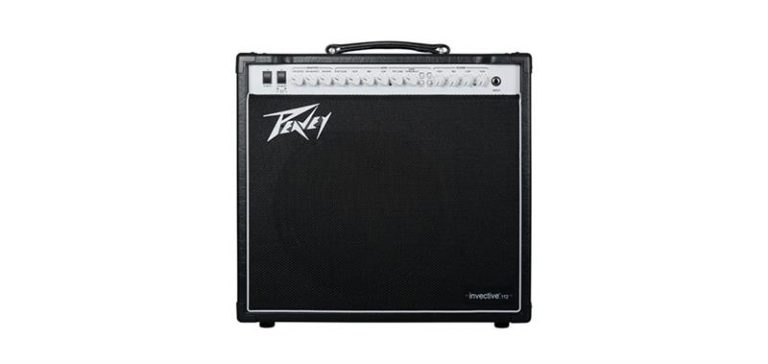
The relationship between a guitarist and their amplifier is perhaps the most critical symbiotic bond in modern music. While the guitar provides the notes, the amplifier provides the soul, the breath, and the physical weight behind the sound. Guitarists chase tone for a reason; the right setup does more than simply increase decibel levels. It shapes character, defines response, and dictates how a player’s unique "touch" translates to an audience. From the pristine, bell-like cleans required for jazz to the aggressive, harmonically rich saturation required for modern metal, the amplifier is the ultimate arbiter of performance.
The modern market is saturated with digital emulations and lightweight solutions, yet many professional players still find themselves returning to a core set of hardware that balances power, reliability, and sonic clarity. This is where Peavey amps for electric guitar continue to stand out as a foundational pillar of the industry. Built for musicians who demand absolute consistency on tour and surgical precision in the recording studio, these designs focus on high-fidelity sound quality and "road-ready" construction without the unnecessary fluff that often complicates a signal path.
A truly professional amp for electric guitar should feel like an extension of the instrument itself. It must respond naturally to the nuances of a player’s technique, the way they pick, the vibrato in their fingers, and the manipulation of the guitar's volume knob. Budget designs often suffer from "tone-sucking" compression or introduce unwanted artifacts and floor noise when the gain is increased. High-quality engineering avoids these pitfalls through the use of stable circuits, oversized transformers, and meticulous voicing.
When evaluating a professional voice, several key performance indicators emerge:
A guitar amp is a mechanical tool, and like any tool used in a professional environment, its build quality determines its long-term value. A poorly assembled cabinet will develop rattles, and inferior input jacks will eventually fail after hundreds of cable insertions.
High-end designs focus on reinforced cabinets, often using high-density materials, to handle the intense vibrations of low-frequency notes. Heat management is another critical factor; professional amps are designed with airflow in mind to ensure that components do not drift in value or fail during a four-hour set under hot stage lights. This focus on "over-engineered" durability is why you will often see amplifiers from thirty years ago still performing on stages today, having survived decades of transport and humidity changes.
The requirements of a studio are vastly different from those of a live venue. In a controlled recording environment, even the slightest hiss or hum can ruin a take. Modern professional amps for electric guitar have adapted to this by integrating features like the MSDI (Microphone Simulated Direct Interface). This allows a guitarist to send a signal directly to a recording console or interface that mimics the sound of a microphone placed in front of a speaker cabinet. This eliminates the need for expensive microphones and soundproof rooms, allowing for world-class tone in home studios.
Furthermore, many modern heads now feature power attenuation, sometimes referred to as a "power sponge." This allows a 100-watt monster to be dialed down to 1 watt, allowing the player to get the "cranked" sound of glowing tubes at a volume that won't disturb the neighbors or clip the inputs of a digital interface.
Whether a player is seeking the glassy, pristine cleans of the Musician 60 (designed for versatile gigging and recoding across all genres) or the gritty, bluesy crunch of a Classic combo, the goal is the same: transparency. The gear should never get in the way of the music.
This is why the philosophy of the manufacturer matters. When a company prioritizes the player’s experience over marketing gimmicks, the result is a product line that feels intuitive.
Properly maintaining an amplifier is the key to its longevity. While solid-state and modeling units require very little upkeep beyond keeping them clean and dry, tube-driven units benefit from a "health check" every few years.
Monitoring the bias of the tubes ensures they are running at optimal efficiency, preventing them from burning out prematurely. Because high-quality amps for electric guitar are built with modularity in mind, repairing them is often a straightforward process for a qualified technician, making them a "life-long" purchase rather than a disposable piece of consumer electronics.
The search for the perfect tone is a journey that evolves as a player grows. A beginner may start with a simple combo amp, but as their ears become more refined, they begin to appreciate the nuance of tube saturation, the tightness of a specific speaker cabinet, and the reliability of professional-grade components.
Ultimately, choosing an amp for an electric guitar is about finding a partner for your creativity. It should inspire you to play more, to experiment with new genres, and to perform with confidence. The fact that Peavey continues to be a staple in the rigs of stadium headliners and bedroom hobbyists alike is a testament to the enduring power of smart, rugged, and tonally superior design. Ready to find your signature sound? Explore the full Peavey range today.
Modern "MH" (Mini Head) versions of classic amps provide the same circuitry as their larger counterparts but at a lower wattage and smaller footprint, making them perfect for home recording and small club dates.
While many prefer the 6505 tube sound, TransTube technology has proven that solid-state circuits can provide the necessary gain and "chunk" required for heavy music without the maintenance of tubes.
Found on the VYPYR series, this allows the amp for electric guitar to change its internal mapping to accommodate the different impedance and frequency requirements of electric, acoustic, and bass guitars.
A professional effects loop allows you to run your pedals (like delay and reverb) after the preamp section, ensuring your effects stay crisp and don't get "muddy" when using the amp's onboard distortion.

