
- Amps
- Instruments
- Pro Audio
- Accessories
- Support
- About
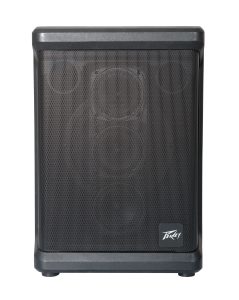
Choosing between a guitar amp and a PA system comes down to one question: are you trying to shape your guitar tone, or project sound clearly to an audience?
Buy the wrong one, and you may end up with a great tone that no one can hear or a loud, clear sound that makes your guitar feel flat and lifeless.
Understanding the guitar amp vs PA system debate can help you avoid buying equipment that doesn't fit your needs.
In this post, we'll break down how each system works, compare their strengths and limitations, and help you determine which option makes the most sense for your setup.
At first glance, a guitar amp and a PA system may seem similar because both make sound louder. However, they were designed with different goals in mind.
A guitar amplifier focuses on enhancing and shaping the sound of an electric guitar. The amplifier becomes part of the instrument's tone, adding warmth, character, and dynamics that many players rely on during performances.
A PA system, meanwhile, is designed to project sound accurately across a larger area. Rather than coloring the sound, it aims to reproduce it clearly for everyone in the audience. This makes it suitable for vocals, acoustic instruments, keyboards, backing tracks, and even entire bands.
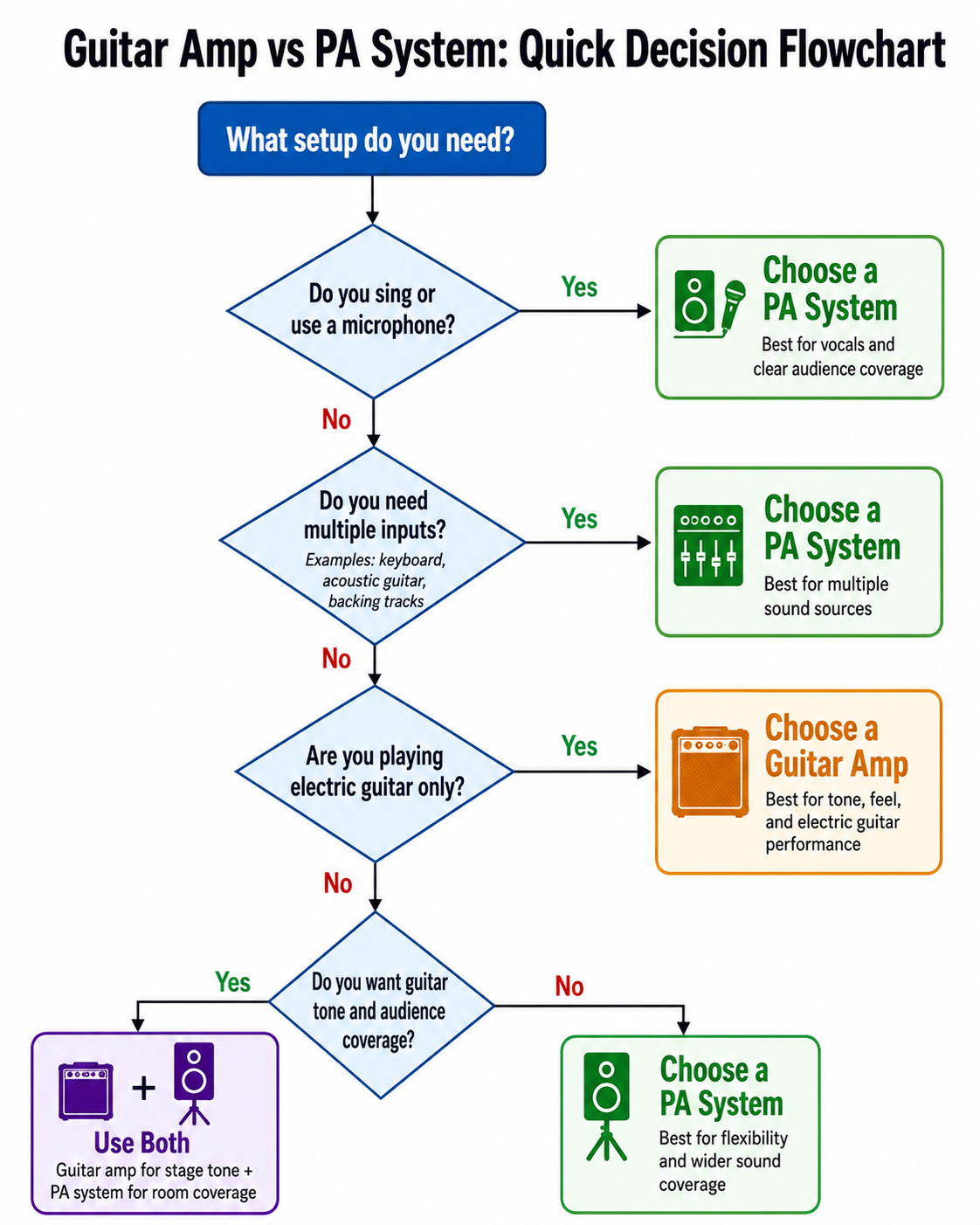
Before choosing between the two, consider:
These factors usually determine whether an amp, PA, or hybrid setup is worth the money.
For electric guitarists, the amplifier plays a major role in creating a signature sound. Different amplifiers respond differently to playing styles, pickups, and effects, which is why many musicians spend years refining their setup.
A guitar amp doesn't simply increase volume. It shapes frequencies, adds character, and creates the feel that players experience while performing. This is especially important for genres such as rock, blues, country, and metal, where tone is a critical part of the music.
Many guitarists choose amplifiers because they offer:
However, amplifiers do have limitations. Most are designed to project sound within a relatively small area. As venues become larger, audience members farther away may not hear the same quality or volume as those closer to the stage.
When discussing a guitar amp vs. a PA system, this difference in sound coverage is often one of the biggest deciding factors.
Although both systems amplify sound, their strengths become much clearer when viewed side by side.
| Feature | Guitar Amplifier | PA System |
| Main Purpose | Shape guitar tone | Amplify multiple audio sources |
| Best Use | Electric guitar performance | Live events and full-band setups |
| Sound Coverage | Small to medium spaces | Medium to large venues |
| Input Options | Primarily guitars | Microphones, instruments, and playback devices |
| Sound Character | Colored and tonal | Clear and neutral |
| Flexibility | Limited to specific uses | Highly versatile |
This comparison highlights the primary difference between amp and PA systems. A guitar amplifier focuses on the musician's tone, while a PA system focuses on audience coverage and overall sound distribution.
For performers who sing, use backing tracks, or play alongside multiple musicians, a PA system often provides the flexibility needed for professional performances.
Interestingly, many experienced performers don't choose one over the other. Instead, they combine both systems to take advantage of their individual strengths.
A common live setup involves playing through a guitar amplifier on stage while simultaneously sending a signal to the venue's PA system. This allows the guitarist to maintain their preferred tone while ensuring the audience hears a balanced mix throughout the venue.
Benefits of using both include:
This is the standard setup for many live gigs: amp for stage tone, PA for audience coverage. Manufacturers such as Peavey Electronics offer solutions that support both traditional amplification and professional sound reinforcement. Musicians looking to build a reliable performance setup can explore available options at Peavey.
For many performers, the guitar amp vs PA system discussion isn't about choosing one or the other. It's about finding the right combination for the situation.
The right choice depends on how and where you perform.
If you mainly play electric guitar at home, rehearse with friends, or perform in smaller venues, a dedicated amplifier will likely provide everything you need. It offers the tonal control and responsiveness that guitarists value most.
On the other hand, if you regularly perform for larger audiences, sing while playing, or need to amplify multiple sound sources, a PA system may be the smarter investment. It offers greater flexibility and can adapt to a wider variety of situations.
For musicians who perform frequently, combining both systems often delivers the best results. You gain the tonal benefits of an amplifier while taking advantage of the coverage and control that a PA system provides.
Choose based on what you need to amplify, how large the room is, and whether guitar tone or audience coverage matters more.
No. A PA speaker is designed to reproduce sound clearly and evenly, while a guitar amp shapes the tone of an electric guitar.
You may need one if vocals, acoustic guitar, keyboards, or backing tracks must be heard by the audience. For an electric guitar in a small room, an amp may be enough.
Yes, especially with an amp modeler or multi-effects unit. Without amp simulation, an electric guitar can sound harsh through a powered PA speaker.
For medium and large venues, yes. Miking the amp lets you keep your stage tone while sending a balanced guitar sound through the main speakers.
Choosing between a guitar amp vs PA system ultimately comes down to your goals as a performer. If achieving the best possible guitar tone is your priority, a dedicated amplifier remains an excellent choice.
If you need wider coverage and support for multiple sound sources, a PA system offers greater flexibility. Many musicians find that combining both systems creates the ideal setup, allowing them to enjoy great tone while delivering clear sound to every listener.
Explore Peavey's range of amplifiers, speakers, and professional audio solutions at peavey.com to find the right equipment for your next performance.

